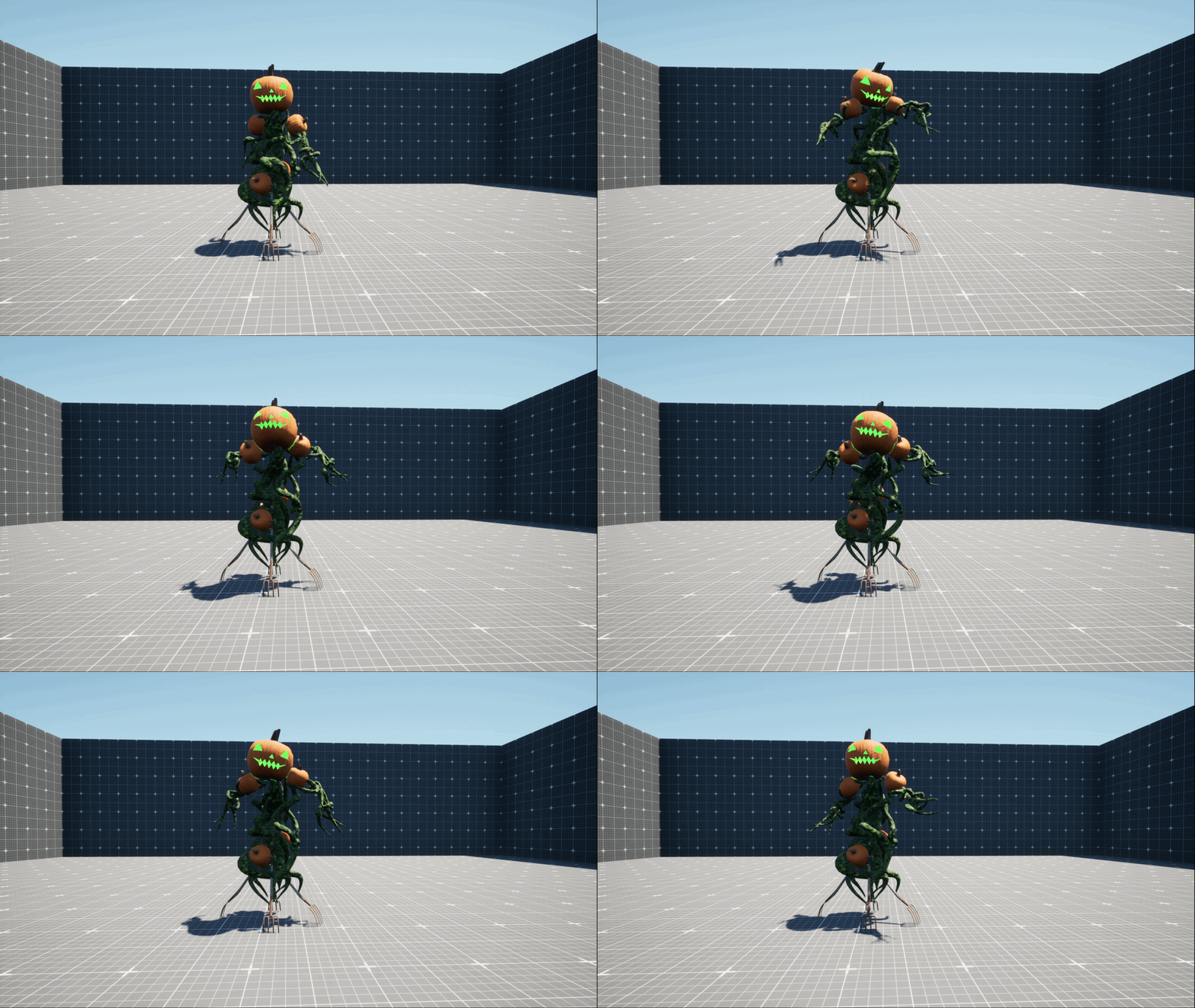
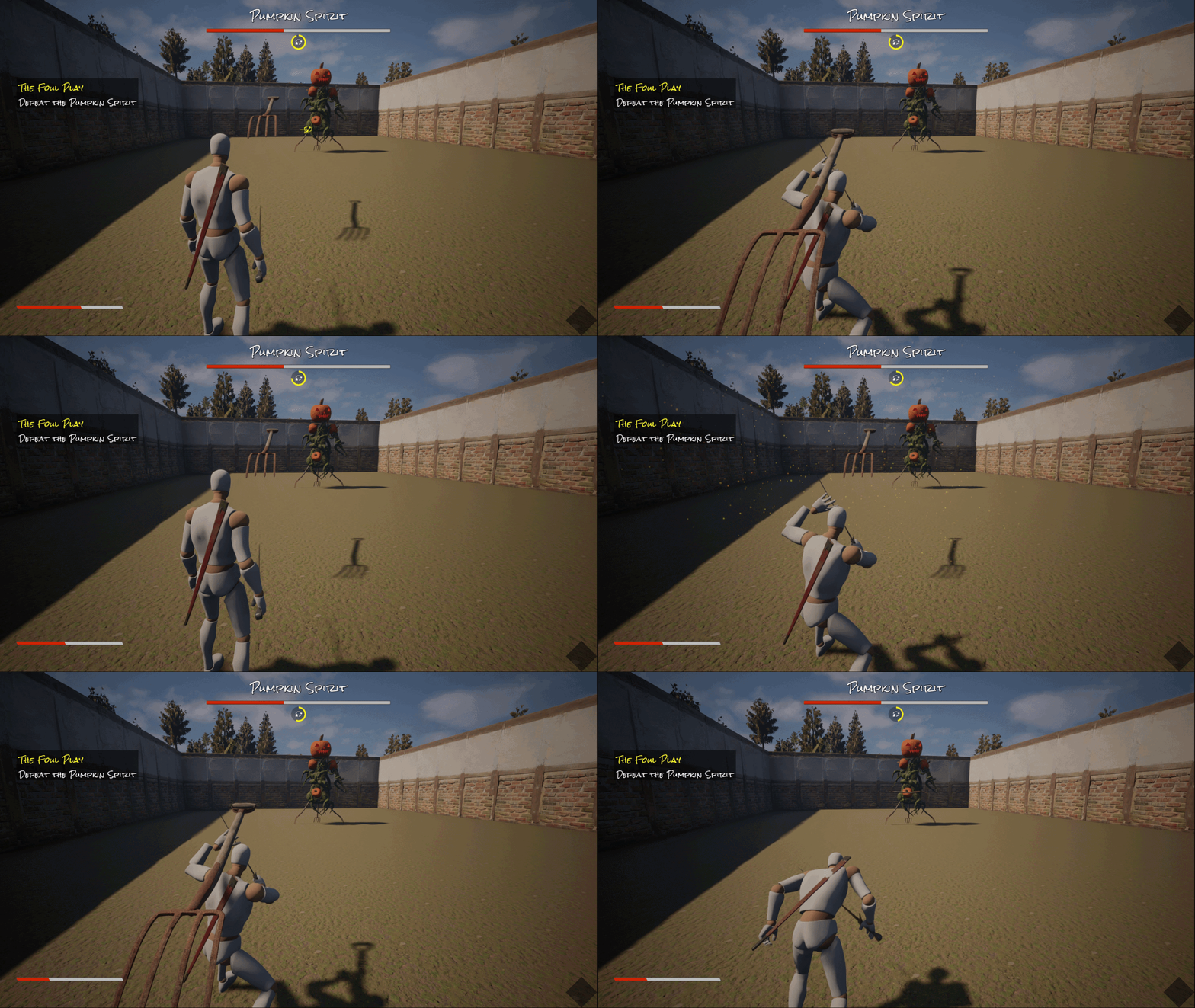
The Pumpkin Spirit is Project Whimsical's first boss encounter - a towering, vine-wrapped creature crowned with glowing jack-o'-lantern heads, wielding four pitchforks and commanding the dark magic of the harvest. It sleeps dormant in an abandoned barn at the edge of the village, awakening only when a player draws too close.
The Encounter Goal
The fight is designed to give the player a sense of saving the village from a dangerous threat. Every mechanic - parrying pitchforks, dodging poison bombs, withstanding vine attacks - is built to make the player feel like they overcame something genuinely dangerous. No single playstyle is forced; attributes shape how the encounter unfolds.
The Stealth Skip
Players with high enough Stealth attributes can bypass the fight entirely - sneaking up on the dormant boss and executing a stealth kill before it awakens. This rewards dedicated stealth builds without locking out the encounter for players who want the full fight.
▶ FULL BOSS FIGHT PLAYTHROUGH
🎃 TWO PHASES 🎃
⚡ PHASE OVERVIEW
The Pumpkin Spirit fights across two escalating phases, each with the same three attack types - but meaningfully different execution and player requirements.
Phase 1
🌿 The Awakening
HP: 100%Threshold: 50%
The boss fights at measured aggression. Pitchforks require one successful parry. A single pumpkin bomb is thrown at a time. Vines deal damage on contact. The player has room to learn the attack patterns and find their rhythm.
Phase 2 - triggers at 50% HP
🔥 The Unleashing
HP: 50%Threshold: 0%
The boss escalates all attacks. Pitchforks now require three successful parries. Three pumpkin bombs launch simultaneously. Vines now stun on top of dealing damage, leaving the player vulnerable to the next attack. Aggression is relentless.
🎃 CORE MECHANICS 🎃
🎮 FIGHT HIGHLIGHTS
🛡️
Parry System
Successfully parrying pitchforks is the primary skill expression of the fight. A successful parry stuns the boss and removes a pitchfork permanently - mastering it strips the boss of its most persistent tool.
🔥
Fireball Damage
The player can deal damage freely using magic fireballs at any time. Fireball damage and cooldown scale with attributes, meaning investment pays off with a faster, more powerful offensive option.
⚡
Stun Windows
Successfully parrying a pitchfork stuns the boss, opening a window for combo attacks. Stun is the only time physical melee damage can be applied, rewarding players who master the parry timing.
🔥
Burn Status
If the fire meter is fully charged, hitting the boss with fireballs applies a Burn status - dealing damage over time. This rewards sustained magical pressure and gives fire-focused builds a powerful DoT tool.
🥷
Stealth Skip
Players with sufficient Stealth attributes can bypass the entire fight. The boss is dormant until the player approaches - a high-stealth approach lets them execute a kill before it awakens, rewarding the stealth build fully.
📊
Attribute Scaling
No single path is forced. Fireball damage, cooldown, and stealth threshold all scale with player attributes - meaning the fight plays out differently based on how the player built their character.
⚔️ ATTACK BREAKDOWN
The Pumpkin Spirit has three attacks, each with distinct mechanics and meaningfully different behaviour between phases. Every attack is designed to test a different player skill - parry timing, spatial awareness, and positioning.
Attack 01
🍴
Pitchfork
The boss wields four pitchforks. When this attack triggers, a random pitchfork is selected and launched at the player - stabbing three times in sequence. Successfully parrying returns the pitchfork to the boss, removes it permanently, and stuns the boss. Failing to parry returns it unfired, still available. If all four pitchforks are parried away, the attack is removed entirely.
Phase 1
1 successful parry sends it back & stuns boss
Phase 2
3 successful parries required before it returns
Attack 02
🎃
Pumpkin Bomb
The boss hurls pumpkins that explode on impact, releasing a cloud of green smoke. Any player caught in the blast zone receives a Poison effect - health decreases slowly until the effect expires. The key counter is spatial - evade the blast zone before it detonates.
Vines spread outward from the boss toward the player's position. In Phase 1 the vines deal health damage if the player is caught in range. In Phase 2 the vines also apply a stun, leaving the player fully vulnerable and unable to evade the boss's next attack - creating dangerous combo potential.
Phase 1
Deals health damage if player is in range
Phase 2
Damage + Stun - player is vulnerable to follow-up attack
🎃 DAMAGE WINDOWS 🎃
💥 HOW TO DAMAGE THE BOSS
The boss cannot be damaged freely. Two specific windows exist - both tied to player skill and build investment.
⚡
Stun Window - Melee
Parrying a pitchfork successfully stuns the boss. During the stun, the player can land combo attacks. Damage during this window scales with the player's combat attributes - high attribute investment means more damage per stun.
🔥
Fireball - Anytime
Magic fireballs can be used at any point in the fight regardless of boss state. Damage and cooldown scale with magic attributes. If the fire meter is fully charged, fireballs apply a Burn status - persistent damage over time on top of the hit.
🥷
Stealth Kill - Pre-Fight
Available before the fight starts. If the player has high enough Stealth attributes, they can approach the dormant boss undetected and execute an instant kill. The entire encounter is bypassed. A true reward for the stealth playstyle.
🎃 STATUS EFFECTS 🎃
☠️ APPLIED STATUS EFFECTS
☠️ Poison
Source: Pumpkin Bomb blast zone Flow: Pumpkin Bomb → Player Effect: Slow health drain until effect expires Counter: Avoid green smoke radius
⚡ Stun (Player)
Source: Vine Attack (Phase 2 only) Flow: Vine Area → Player Effect: Player immobilised, vulnerable to follow-up Counter: Avoid vine range in Phase 2
🔥 Burn (Boss)
Source: Fireball when fire meter is full Flow: Player's Fire Ball → Pumpkin Spirit Effect: Boss takes damage over time Trigger: Requires fully charged fire meter
⚡ Stun (Boss)
Source: Player Parried Pitchfork Flow: Pitchfork → Pumpkin Spirit Effect: Pumpkin Spirit immobilised, vulnerable to player attacks Trigger: Parry Pitchfork once (Phase 1); Parry Pitchfork thrice (Phase 2)
⚡ Boss Stun - Parry Reward
When the player successfully parries a pitchfork (completing the required parry count for the current phase), the boss is stunned and the pitchfork is removed permanently. This is the only melee damage window and the core skill-expression loop of the fight. Each pitchfork parried is a permanent advantage - the boss becomes less dangerous and more vulnerable with each successful exchange.
⚡ FULL FIGHT FLOW
This diagram traces the complete encounter - from the dormant boss through both phases, all attack branches, damage windows, and possible endings.
💤 DORMANT BOSS Inactive in abandoned barn
High Stealth ↓ Stealth Kill
Player Approaches ↓ Boss Awakens
🥷 Stealth Kill Boss eliminated silently
↓
🏆 Village Saved
🌿 PHASE 1 - The Awakening 3 attacks active · 100% HP → 50%
↓
Pitchfork
1 parry → stun
Pumpkin Bomb
1 bomb → evade
Vine
damage only
↓
HP reaches 50%
↓
🔥 PHASE 2 - The Unleashing All attacks escalate · 50% HP → 0%
↓
Pitchfork
3 parries → stun
Pumpkin Bomb
3 bombs → fast evade
Vine
damage + stun
↓
Parry stun → melee
⚡ Combo damage
Fire meter full
🔥 Burn status
↓
🏆 Pumpkin Spirit Defeated - Village Saved
🎃 PITCHFORK PERSISTENCE 🎃
🍴 HOW PITCHFORKS ARE REMOVED
The pitchfork mechanic is a cumulative system - each successful parry permanently strips a weapon from the boss, making the fight progressively more manageable.
BOSS STARTS WITH 4 PITCHFORKS
↓
Random pitchfork selected → launched → stabs player 3 times
✅ Player Parries (Phase 1: 1× / Phase 2: 3×)
Pitchfork returns → Boss stunned → Pitchfork removed permanently
❌ Player fails to parry
Pitchfork returns to boss → still available for future attacks
↓
All 4 pitchforks parried → Attack removed entirely from fight
🎃 FLOW DESIGN AIM 🎃
🏛️ CORE FLOW AIMS
The core flow of the combat is based on two important pillars.
1
Readable moves
Each move is distinct without any indicators.
Pitchfork enables high risk with high reward by stunning Pumpkin Spirit when parried.
Pumpkin grenades force players to move.
Vine attack gives player breathing room after evading to perform magic attacks.
All these attacks combined with move rotation logic will make sure player is always on their toes.
2
Cumulative Intensity Scaling
Phase 2 is a graduation, not a reinvention
The boss does not pull a new, unseen weapon in Phase-2; instead, the intensity of existing attacks is dialled to the limit.
Pitchfork requires parrying thrice. 3x bombs are thrown at player in quick successions.
Being in vine attack range stuns player.
This ensures the player feels the thrill of mastery-they aren't struggling to learn a new fight;
they are proving they have truly mastered the first one.
🎃 DESIGN PILLARS 🎃
🏛️ CORE DESIGN PRINCIPLES
Four pillars guided every attack, phase transition, and player-facing mechanic in the Pumpkin Spirit encounter.
1
Playstyle Inclusivity
No single build is required. Melee players use the parry-stun loop. Magic players fire continuously and build Burn. Stealth players skip the fight entirely. Attribute investment is always meaningful - the fight adapts to the player, not the other way around.
2
Earned Escalation
Phase 2 isn't a sudden wall - it's a tested player entering a harder version of a fight they've already survived. Every mechanic the player learned in Phase 1 is stress-tested in Phase 2. Pitchforks demand more parries. Bombs require faster reads. Vines now punish with stuns. Difficulty rises through familiarity, not surprise.
3
Cumulative Player Advantage
The pitchfork system is designed to reward skilled play persistently. Each parried pitchfork is gone forever - the boss genuinely becomes less dangerous as the fight progresses. Players who master the parry aren't just surviving; they're dismantling the boss. This makes the endgame feel like a victory the player earned, not one that was given.
4
Tension Through Vulnerability
The Phase 2 vine stun creates a chain-threat moment - caught by a vine means the next attack hits a helpless player. This brief window of total vulnerability is the fight's most tense design beat, making evasion in Phase 2 feel meaningful rather than mechanical. Players who understand the chain reward themselves by never letting it close.
🎃 SYSTEMIC CONNECTIONS 🎃
🔗 HOW THE SYSTEMS INTERACT
The boss fight isn't a standalone encounter - it's a system where the player's attribute investment, the parry loop, the fire meter, and the phase structure all feed into each other.
PLAYER ATTRIBUTES
(Combat, Magic, Stealth)
↓
Stealth high enough → Skip fight entirely via stealth kill
↓
Combat attributes → Melee damage during stun windows
Parry skill → Pitchforks removed → Boss weakened permanently
↓
Phase 2 at 50% - all attacks escalate, tests all learned skills
(Every run plays differently based on how the player built their character)
How This Creates Depth:
Parry as Investment: Each successful parry is a permanent mechanical advantage. Players who commit to the parry timing gradually remove the boss's most persistent attack, creating a rewarding skill loop with visible consequence.
Fire Meter as Rhythm: Fireballs can be used freely but Burn only activates at full charge - encouraging players to manage a resource rather than spam. Magic builds play as a rhythm game layered on top of the dodge-and-react core.
Vine-Stun Chain: The Phase 2 vine stun is the fight's only true combo threat - vine into stun into the next attack. This single interaction elevates Phase 2 from "harder attacks" to "attacks that punish positioning failures with a chain."
Stealth as Full Alternative: Treating stealth as a complete bypass rather than just a bonus rewards attribute specialisation meaningfully - stealth players get a resolution that fits their playstyle, not just a shortcut.
🎃 DESIGN LEARNINGS 🎃
💡 KEY INSIGHTS FROM BUILDING THE PUMPKIN SPIRIT
Learning 1: Permanent Consequences Make Skill Feel Real
The pitchfork removal system taught me that the most satisfying skill expression isn't dealing big damage - it's changing the fight itself. Each parried pitchfork changes the enemy's available toolkit permanently. Players feel powerful not because numbers went up, but because the boss became visibly less threatening.
Learning 2: Phase 2 Should Test, Not Surprise
Early in design, Phase 2 could have introduced entirely new attacks. Instead, escalating the existing three attacks proved far more effective - players already understand the threat vocabulary and are immediately tested on it under pressure. A harder version of a known attack is more satisfying to overcome than an unknown one.
Learning 3: Chain Threats Create the Fight's Best Moments
The vine-stun → follow-up attack chain in Phase 2 is the single most tense moment in the encounter. A chain threat - where one attack creates vulnerability for the next - elevates the fight beyond individual attacks. Attacks that create vulnerability for other attacks demand more from players than attacks that simply deal damage.
Learning 4: A Boss Fight Is a Playstyle Test
Supporting three completely different resolution paths - melee, magic, stealth - forced every mechanic to be re-evaluated through each lens. The result is a fight that rewards how the player built their character, not just how skilled they are at a single interaction. Boss fights that accommodate multiple playstyles reveal which systems are genuinely flexible and which ones only appeared to be.
Learning 5: The Stealth Skip Is a Design Statement
Allowing the boss to be bypassed entirely via stealth wasn't just a feature - it was a commitment to the attribute system's promise. If stealth is a valid build, it must be valid in the hardest encounters too. Giving stealth builds a complete resolution, rather than a partial shortcut, is what makes the attribute system feel meaningful rather than cosmetic.
Learning 6: Status Effects Need a Player Counterpart
Poison and Stun on the player, Burn and Stun on the boss - the fight uses the same status effect vocabulary in both directions. This symmetry makes the effects readable and the fight feel like a conversation between two combatants rather than a one-sided threat list. Shared mechanical language between player and enemy creates coherent encounter design.
⚙ FINAL THOUGHTS ⚙
💡 THINGS I DID WELL
Readable Attacks
By ensuring that each attack had a distinct visual and mechanical identity, I was able to make the fight more readable and easier for players to understand. Players could quickly identify which attack was coming next and react accordingly, which made the fight feel more fair and skill-based.
Playstyle Variations
By allowing players to approach the fight in different ways, I was able to create a more engaging and rewarding experience. Players could choose to focus on melee combat, magic attacks, or stealth, which allowed them to tailor the fight to their preferred playstyle and feel more invested in the outcome.
Two Stage Fight
By creating a two-stage fight, I was able to create a sense of progression and escalation. Players had to adapt to new attack patterns and strategies as the fight progressed, which kept the encounter fresh and exciting. The second stage also allowed me to build the mechanics and challenges that tested the player's skills in different ways.
💡 THINGS I DO NOT LIKE
Change 1: More Visual Cues
I would like to have more visual cues for the boss's attacks. For example, the pitchfork attack could have a audio indicator that shows when it is about to be launched. This would make the fight more readable and allow players to react more effectively.
Change 2: Finetune the Impact of Attribute Points
I would like to have a more fine-tuned impact of attribute points on the fight. For example, a player who invests heavily in magic attributes may be able to deal more damage with fireballs, but they may also be more vulnerable to the boss's attacks. This would make the fight more challenging and rewarding for players who invest in different attributes.